
Get studious

I included this section for those who may want to know more about Perennial Philosophy. Like a Picasso painting, a Duke Ellington phrase, or single-malt scotch, Perennial Philosophy is an acquired taste. A-ha moments usually come in drips and splashes over time. Some are lucky to get the whole thing in an instant, and a few mystery schools are set up to achieve that, such as Zen.
Simply speaking, Perennial Philosophy recognizes that each of us has a unique “everyday mind” out of which come our individual thoughts, emotions, values, moral principles, religious beliefs, etc. The everyday mind guides us through the routines and adventures of life. It is moral in accent and struggles with the coincidence of opposites. That is, the everyday mind feels a strong urge to take one side or the other in any issue. It seems unable to understand the mutual necessity of opposites.
But there is another part of your mind, of consciousness--an undifferentiated part sometimes called the Unborn Mind--that clearly knows the mutual necessity of opposites. Its ultimate expression constitutes another field of consciousness that just "is."
The Indian philosophers used the Sanskrit word Advaita to describe it, literally "non-dual." The Ephesian philosopher Heraclitus called it the Logos. Plato alluded to it as the Realm of the Forms. The old Chinese teachers called it Tao. The Buddha called it Nirvana ("blown out") and the later Buddhist teacher Nagarjuna called it Shunyata ("emptiness"). The North African philosopher Plotinus called it The One, and Jesus aphoristically referred to it as the Kingdom of Heaven. It is not a place where you go when you die, but a state of realization in the mind right here on earth.
Regardless of name, this featureless, unfiltered state of awareness is not a theory or an imagined idea but a real psychological state that the Perennial Philosophers tapped through centuries of experiment and experience. One of the ways to come to such an experience is through diligent study. Academic study in classical spiritual philosophy was the first step in my pursuit of the Unborn Mind, the name I use to describe whatever that mystery is. After my divorce, I shelved my real estate appraisal company, quit playing in bands, and turned over the Crawfish Festival to others. This made it easy to shift back into beginner's mind, free to begin graduate study at Prescott College, a small liberal arts school in northern Arizona. They developed an excellent writing-intensive Master of Arts Program based on a 1960's model out of Vermont College. I focused my study and research on the originators of Perennial Philosophy, demonstrated in the six papers that follow.
If you want to master electric blues guitar, you can't just listen to the great Stevie Ray Vaughn. You have to penetrate deeper into BB King, Johnny Guitar Watson, and Albert Collins. And to understand King, Watson, and Collins, you have to go back even further to Muddy Waters, T-Bone Walker, and John Lee Hooker. These are the originators of electric blues.
I used the originator approach in designing my study plan at Prescott College. I zoomed through the textbook traditons, to then pierce deeply into the great Perennial Philosophers of the classical East & West, centered a few hundred years either side of 500 BC. These early geniuses spanned the Old Silk Road from Europe to the Far East and collectively created what we would call today a paradigm shift in human awareness.
I was relentless about identifying a Ph.D. in my field who understood that I could study this area in-depth in a single masters degree program. Once I found that advisor--which took awhile--it took even longer to get accepted into an accredited graduate school to actually do the work. Prescott College stepped up and suddenly I'm back to school at age forty! Finally, the authentic education I was looking for began to unfold.
Though I was only required to write a standard graduate research paper for each course, I challenged myself to write a masters level thesis paper for each course, which set the stage for my actual thesis project, a book I wrote in my final semester entitled The Education of Adam Speaker (BOOKS).
But back to the papers...this stuff isn't for everyone. You may have to toke a little sativa or burn some high-grade aloeswood to get into this material. Or perhaps you just need to be ready to hear it. Click on each photo to link to its accompanying research paper.

"Hindu Spiritual Philosophy"
* * *
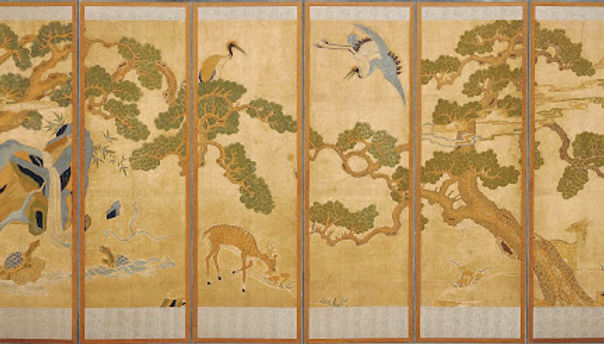
"Taoism:
Lao Tzu & Chuang Tzu"
* * *

"The Buddha's View on the Nature of Self"
* * *

"Heraclitus and the Soul as a Process"
* * *

"Plato’s
Evolving Soul"
* * *

"Hermeticism, Gnosticism, & Neoplatonism"
* * *
Unsolicited critiques from scholars in the field:
"Richard has a gift. He is able to translate philosophical wisdom into a context that breathes life into old forms and allows for new growth."
Dr. Beverly Lanzetta, Director
Schola Divina Contemplative Studies
Graduate Faculty, Prescott College
___________________________________
"Richard, thanks for skillfully portraying the unportrayable, sharing the unsharable.
Your ability to communicate is one of the best I’ve seen."
Dr. George Addair
Founder & Director, Omega Vector
Phoenix, Arizona
___________________________________
"Richard’s work is truly remarkable, drawing excellent relationships among the traditions. He makes the ancient philosophers so clear, it’s amazing."
Dr. Joan Price, Professor Emeritus,
Philosophy & Religion, Mesa Community College
___________________________________
"Dance's work is by far the most creative approach to the Perennial Philosophy!"
Dr. Michael Pryzdia
Professor of Leadership & Integrative Studies
Arizona State University
___________________________________